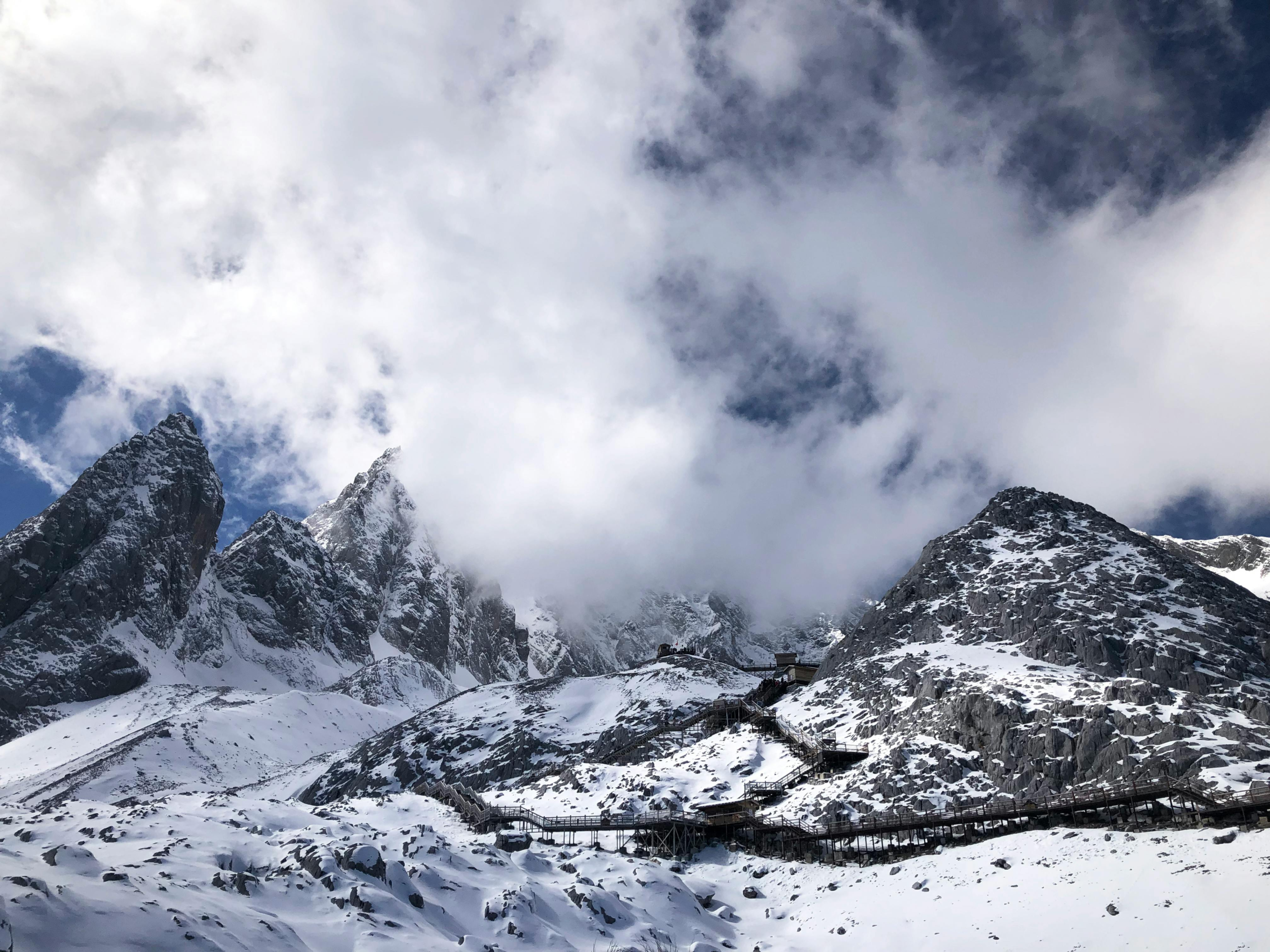
Snow has been top of mind this week.
I’m writing this post while on holiday in the Swiss Alps. There’s always a familiar trepidation ahead of a ski trip — that ubiquitous investor holiday — about whether there will be enough snow to enjoy fluffy, powdery slopes, or whether you’ll end up clinging to the edge of icy, patchy runs for dear life. For companies that operate the infrastructure and services within ski resorts, snow isn’t just a nice-to-have. It’s existential.
Meanwhile, for many Americans over the past week, the worry has been very much the opposite, as they awaited a major winter storm sweeping across the country.

Source: BBC (as of 27 January 2026)
The sheer scale of this storm has been remarkable. Hundreds of millions of people were affected; twenty states declared a state of emergency; around one million power outages were reported; and, at the time of writing, an estimated forty fatalities.
This historic storm prompted President Trump to post on Truth Social:

Source: Truth Social (as of Jan 23 2026)
Politics aside, climate change and global warming can create confusion when it comes to snow patterns. Many people understandably assume that higher temperatures simply mean drier conditions.
In this article, I share evidence to help investors understand how a warming world affects snowfall, the impact of winter storms across sectors, and — for the week that’s in it— what adaptation and resilience look like for ski resorts.
Snow Science for Investors
First, a quick glossary to help make sense of the snow outlook:
- Global warming – The long-term warming of the planet.
Source: NASA - Climate change – Encompasses global warming and its effects, including rising sea levels; shrinking mountain glaciers; accelerating ice melt in Greenland, Antarctica and the Arctic; and shifts in flowering and plant-blooming times.
Source: NASA - Weather – Weather is made up of six main components: temperature, atmospheric pressure, cloud formation, wind, humidity and precipitation. Small changes in any of these can create very different weather patterns.
Source: National Center for Atmospheric Science
For investors, the key issue when it comes to snow is the knock-on effect of rising global temperatures on precipitation.
While we often associate higher temperatures in our day-to-day lives with drier conditions, the reality is more complex.
Warmer air increases evaporation from land and oceans, and warm air can hold more moisture. This moisture-rich air also absorbs more heat, creating a feedback loop of further warming and even greater moisture content.
When it comes to snow, this dynamic plays out through two key pathways:
- Long-term structural trend
Warmer temperatures shorten winters, reduce total snowfall, and increase the share of precipitation that falls as rain rather than snow in historically snowy regions. - Short-term, local event risk
In a warmer, more humid atmosphere, when weather systems converge, the intensity of winter storms can increase.
This distinction matters. Climate change raises average temperatures and increases the risk of extreme weather events — including winter storms — when and where the conditions align.
Investment Implications of Winter Storms
New research led by academics at the University of Zurich provides fresh evidence on how different extreme weather events affect firms. The study examines both reported positive and negative impacts in corporate filings, as well as estimated effects using cumulative average abnormal returns (CAAR).
I highlighted this paper recently but it is worth returning to it to explore their specific findings on the impact of winter storms on CAAR.

Source: Schimanski, Tobias and Gostlow, Glen and Toetzke, Malte and Leippold, Markus, What Firms Actually Lose (and Gain) from Extreme Weather Event Impacts (January 06, 2026). Available at SSRN: https://ssrn.com/abstract=6035794 or http://dx.doi.org/10.2139/ssrn.6035794
Interestingly, the authors find that, on average, CAAR following winter storms was positive across their sample.
When they examined Storm Uri — one of the most severe winter storms included — it became clear that energy providers (classified within the mining sector) were the primary beneficiaries, driven by surging energy prices during the crisis.
The chart below provides a useful summary of the CAAR for each sector they analysed.

Source: Schimanski et al (2026)
This is, of course, just one paper. But its recency and methodological depth make it a useful reference point for investors assessing how winter storms have affected listed US companies over recent decades.
Which Ski Resorts Will Survive Climate Change?
Global warming is bad news for many companies in and consumers of the ski industry.
There is already clear evidence of change. Research suggests that US ski resorts experienced an average shortening of the ski season by around 34 days between 1982 and 2016. European ski seasons have shortened by 38 days since 1960.
This matters for the economies that rely on winter sports. In the US, ski resorts generate over $20bn annually; in Europe that figure is €34bn. Not to mention the thousands of workers and communities that rely on winter sports.
The long-term viability of ski resorts in a warming world depends on several key factors:
1. Structural resilience
All else equal, resorts at higher altitudes and latitudes are better positioned than lower-lying ones. North-facing slopes also retain snow more effectively, as they receive less direct sunlight and heat.
2. Adaptation capacity
Resorts can adapt — but not cheaply.
- Maintaining ski capacity often requires water-intensive snowmaking systems and expensive protective coverings for glaciers during the summer months.
- Transforming the resort model requires capital investment and changing consumer preferences, shifting towards hiking, wellness, and other activities less dependent on snow. Stronger summer seasons can help offset increasingly unreliable winter conditions.
Savills publishes an annual index measuring the resilience of major ski resorts, capturing some of the structural resilience factors outlined above.
(One important caveat: rankings are partly influenced by weather conditions in the specific year, which may limit how well they reflect true long-term resilience. Without full visibility into the methodology, it’s difficult to assess the magnitude of this effect.)
Vail topped the 2024–2025 index, followed by well-known European resorts such as Zermatt and Val d’Isère.

Source: Savills (as of January 2026) Full report available at: https://pdf.euro.savills.co.uk/global-research/savills-ski-2025-26-en.pdf
At the other end of the spectrum last year were the small Scottish resort of Glencoe, alongside Austrian resorts Gschwandtkopf and Saalbach.

Source: Savills (as of January 2026)
Snow is often not the first to come up when investors think about the changing world. But whether it is portfolio exposure to winter storms or a personal penchant for winter sports, this is a topic that deserves more attention. I look forward to digging deeper in future notes.
If you enjoyed this article, you can subscribe using the button below to get Resilient Investor research straight to your inbox.